
I apologize if you don't like snakes.
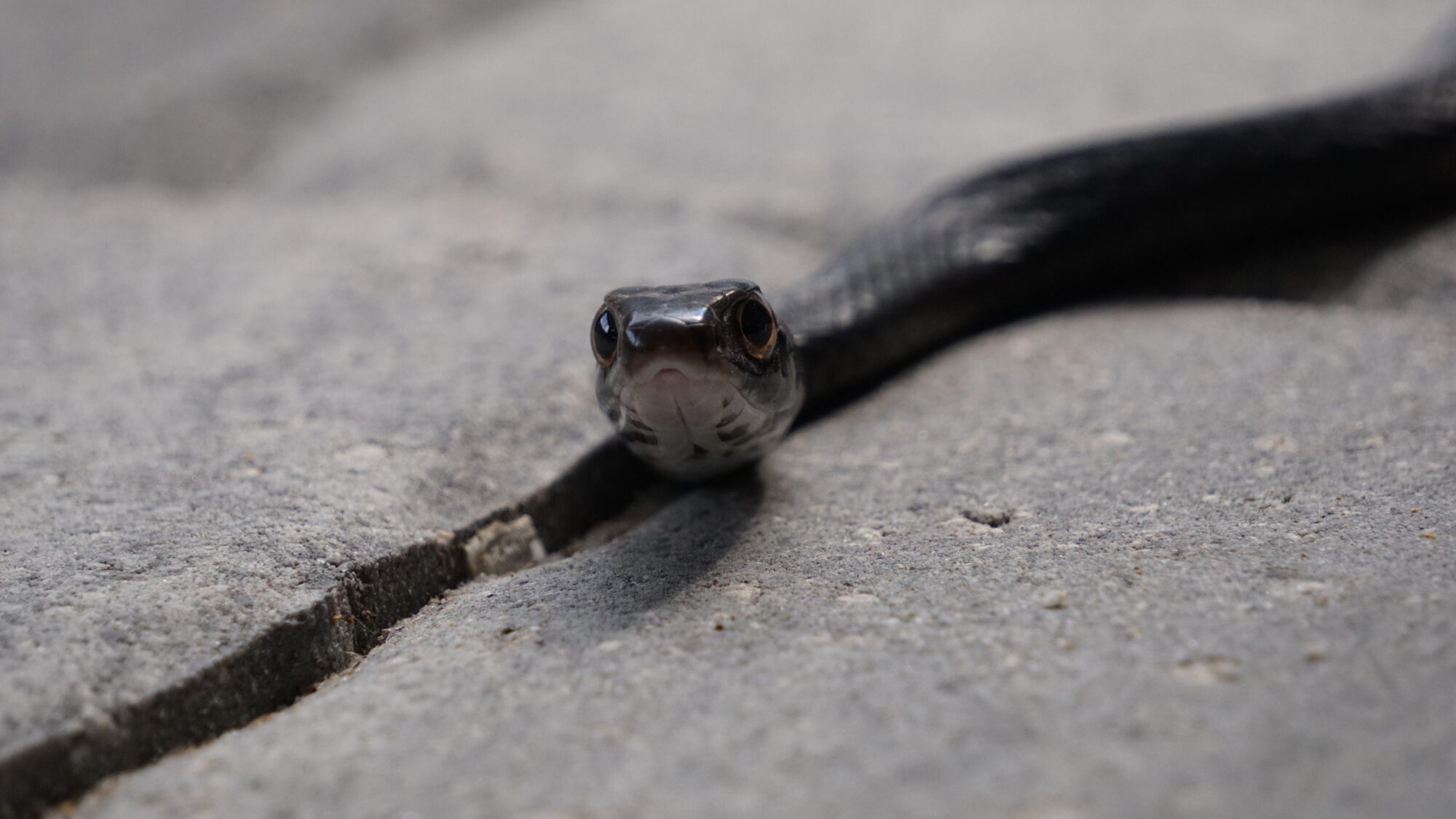
210mm 1/400s f/6.3 ISO 1250
Aperture.
What does aperture even mean?
If you ask the dictionary, it will give you two definitions; both of which are correct answers.
Definition 1: an opening, hole, or gap. --- Definition 2: a space through which light passes in an optical or photographic instrument, especially the variable opening by which light enters a camera.
Yes, both of these are correct definitions even when applied to photography. But for the sake of this explanation, I will stick with the second definiton most closely.
All modern cameras have a variable aperture. Which means the size in which the opening, or space, that light enters your camera lens can become bigger or smaller depending on what you want to use it for. Most commonly aperture is meant to create depth of field which draws the focus of an image to the selected subject.
Look at the head of this cute little guy above (to be referred as "Alucard"). It is sharp and in focus. Your eye is naturally drawn to Alucard's curious eyes. Why? Aside from being the only interesting thing in this photo, is the way I used aperture to create the depth of field I was going for, its shallow. I want you to notice that Alucard's body is not in focus and appears blurry, and the same could be said about the cement pavers in the foreground that is because of the open aperture I selected for this shot.
It sort of appears like a gradient of what is and isn't focused. Why does aperture do this?
Lets start with a camera's lens. A camera lens is more or less a "tube" of sorts that have a minimum of two magnification lenses, but usually more. One of these lenses is the distance focus lens, which is responsible for making sure your subject looks sharp and crisp. Then when the light passes through the lens it hits the aperture diaphram, which consists of blades arranged in a circular pattern that forms "an opening, hole, or gap" like the one in the gif below.
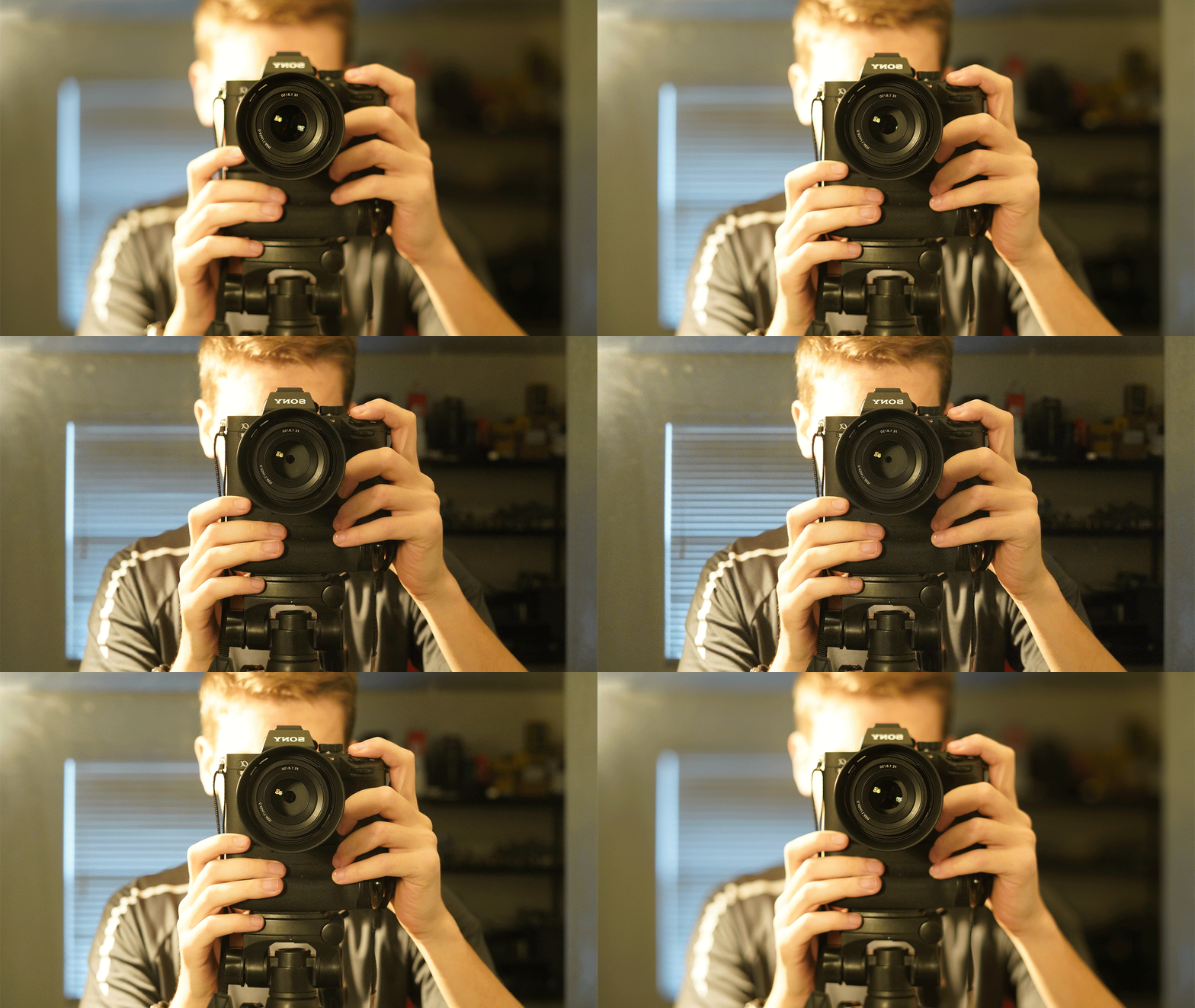
50mm 1/160s f/1.8-11 ISO Auto
What aperture does, is limit or allow an amount of light to hit the sensor of the camera. When it is open, or has a "wide aperture" as we call it, the light that bounces any which way off of everthing it touches also bounces inside the lens tube, after it is refracted from the zoom lens at the front. This causes an open aperture image to look very sharp at whatever your subject is.
A tight or "closed aperture" eliminates some of the abberated light, leaving only what is in the center of the lens' light to hit the sensor instead, leading to a more open-focused image. You can see this clearly in the gif above, I dropped the aperture incrementally all the way down to ƒ/11 for this example (any tighter and the image would have been too dark for this to show). When the camera reaches ƒ/11, you can see my figure and background behind me more clearly than you could at the start at ƒ/1.8, yet my camera's lens, which was the focusing point, stays sharp throughout.
Kind of neat, huh?
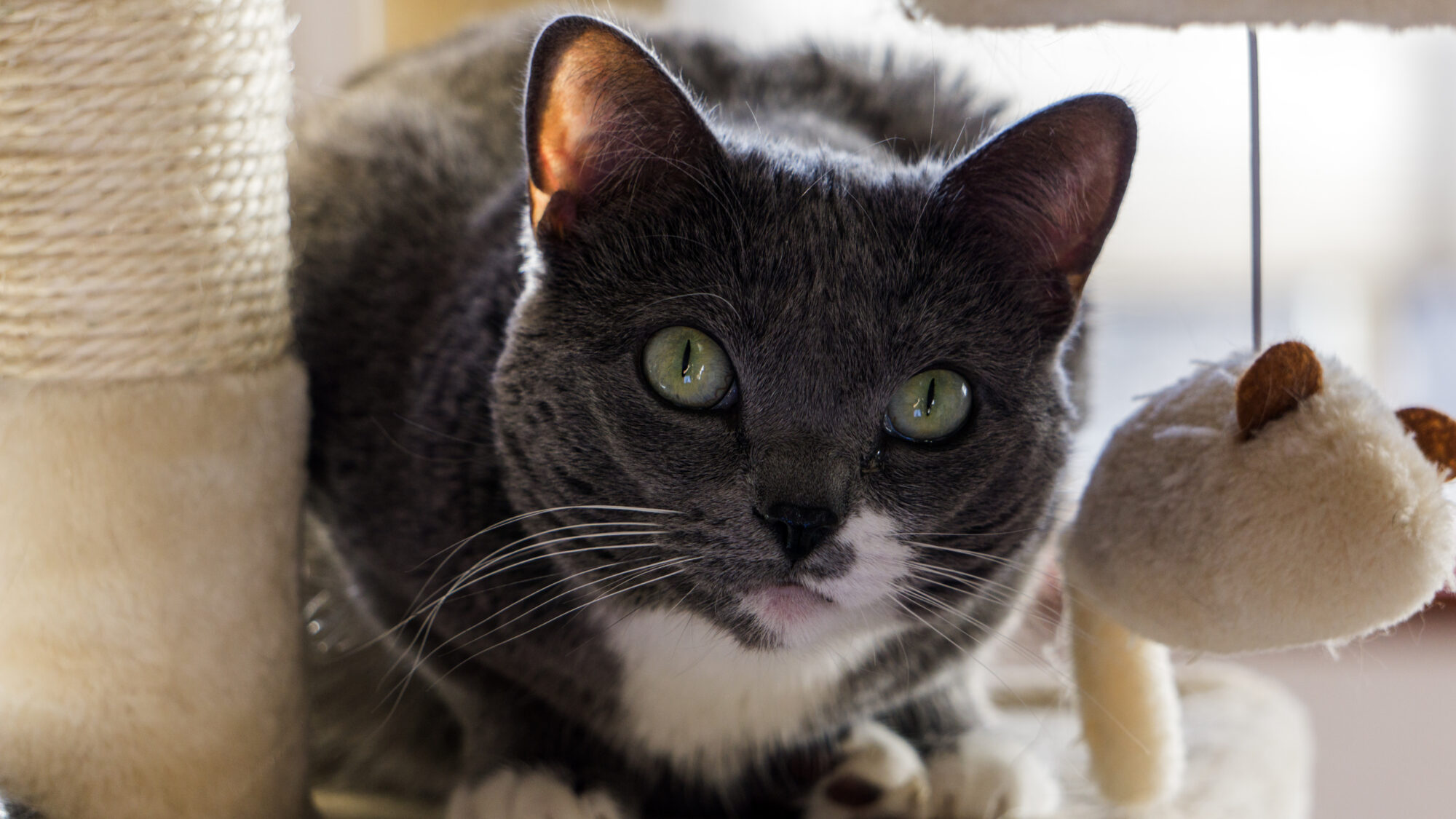
98mm 1/160s f/5.6 ISO 320
As I said earlier, Aperture also effects how bright your image will be, so if you only touch aperture settings and neither the shutter speed or ISO settings, it could result in a too bright or too dark image. You will need to watch out for that.
Now, how do I use aperture for my photography? Primarily I take portraits of my subjects, and they are most flattering when the focus is solely on them, meaning my depth of field is sharpest when I have a more open aperture. Generally for these I try to stay in the ƒ/2.8 to ƒ/8 range for a portrait application. I've found that any wider of an aperture, while still sharp in focus, loses some details such as an ear appearing blurry or you can't see strands of hair after a certain point because of the narrow depth of field.
On the tighter end of the spectrum, the depth of field sharpness declines rapidly. At ƒ/9, the background becomes too in focus distracting the composure of the image away from the subject. (Bonus tip: this isn't always a bad thing if you compose your shot correctly).
I should mention that the lens type does play a factor in the way depth of field is shown, such as a long telephoto lens or a "pancake" lens, but that is an article for another day.
So there you have it! This was a basic guide to understanding how Aperture works and the ways you can use it.
If you would like to see more examples, please take a look at my portfolio page here:
https://nonegatives.pro/no-negatives-home/gallery/