
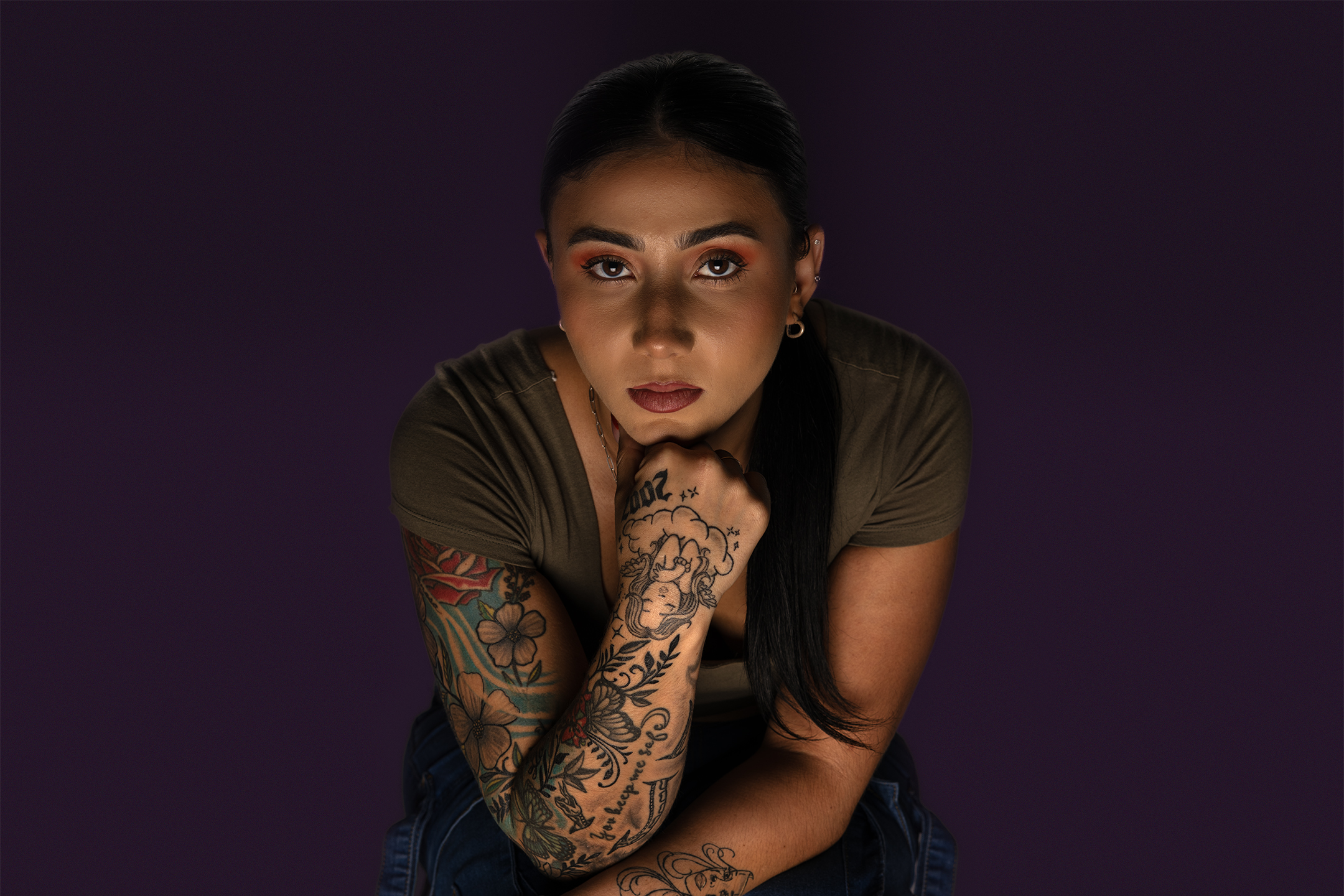
50mm 1/200s f/5.6 ISO 200
You may have seen this image of my good friend Gianna (@giasvisuals) on my Pricing page. In fact, its the reason I was inspired to write this article. Lighting is an essential part of photography, and not necessarily for portraits such as this, but for an image as a whole.
Photography, if we were to break it up into the prefix and suffix would translate to "the representation of light" in Latin. Light is an essential part of any photo, simply on the grounds of: if there is no light, there is no photo. That is because we aren't taking a picture of a subject. We are taking a picture of the light reflecting off the subject. There is a lot I could explain about the concept of light to you. But for this article, I will narrow it down to how we can use it for portraits, like the one above.
Shapes
I teach a monthly Photography club, where I consistently tell my members that contrast is what makes a photo great. Not in the strictly visual "black and white" sense (though that may apply sometimes) but more in the way that helps us define shapes, because the color of an object is not the same as whatever is behind or next to. Take the below image for example.
I removed the color on the image on the right to help explain my point. In this engagement photo-shoot I did earlier this year, I'm employing a composition technique known as "framing" as well as using the light to define shapes. Take a look at this couple's heads. They both have dark hair, making it stand out from their skin and the surrounding background. Optically speaking, we know this as a basic truth when we look at the other things in this image and how they contrast with other elements to give us not only details, but the perception of depth (more on that later) using context clues, like angles.
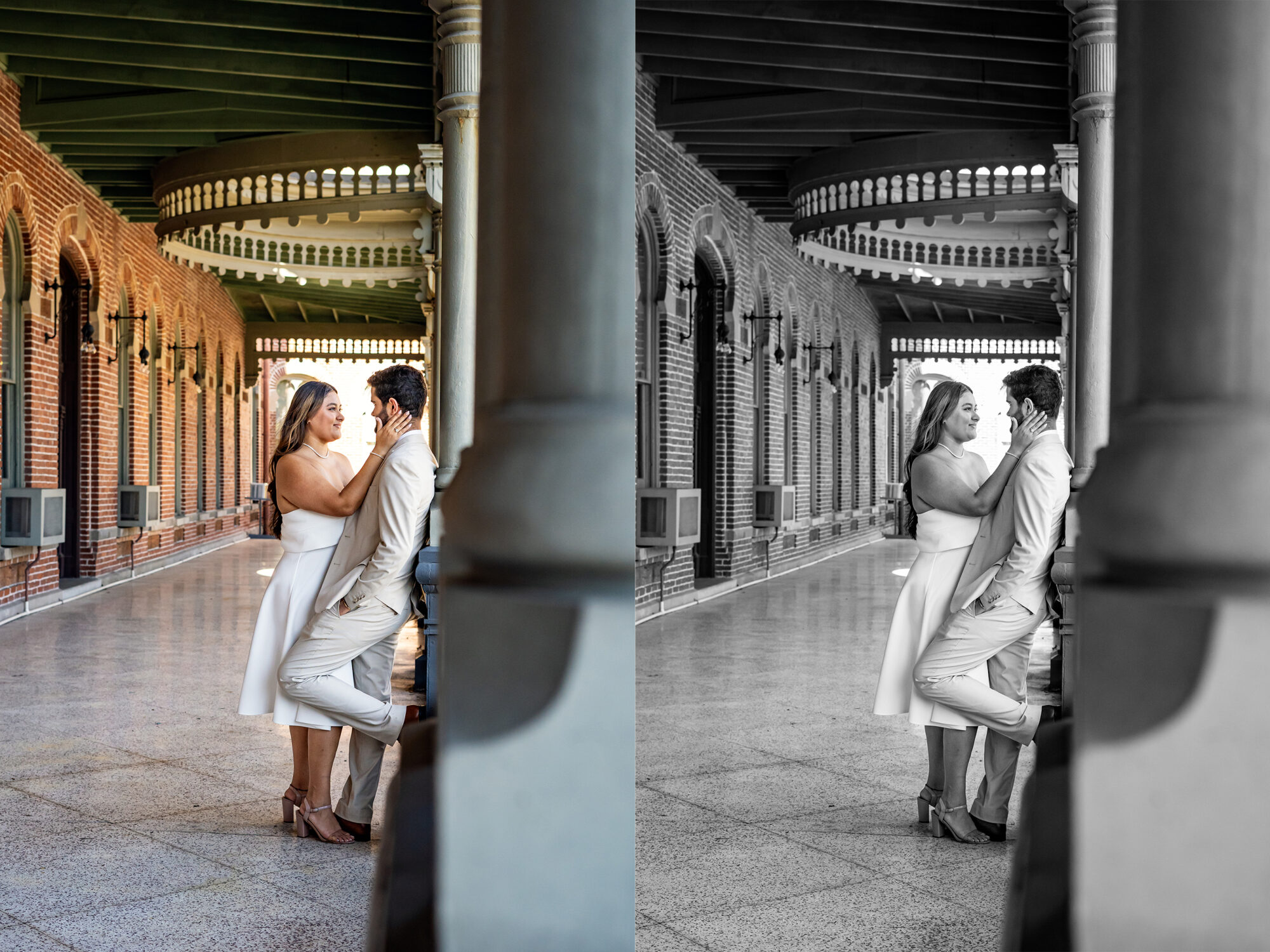
Shapes require contrast to be shapes. The brickwork in particular works because it has contrast! Am I being annoying about contrast yet? Good.
What about the circular arch there on the ceiling? How does that shape work? How about the struts? Or the pillars? All of it has some level of contrast to convey a sense of shape.
So how does this apply to portraiture?
When it comes to the face, there are many "shapes" that comprise the actual shape of the face. If I was to simplify it down a little, I could say we all have a triangular nose, or circular cheekbones. But the way we would define them comes down to the contrasting colors that make that shape in a 2-D image.
To do this most effectively, we rely on shadows. On an instinctive level, we already know this. It helps us figure out spatial awareness of where any given object is, and not just the shape of that object. In addition, shadows also imply the direction of a light source. Which will be important to know in just a moment.
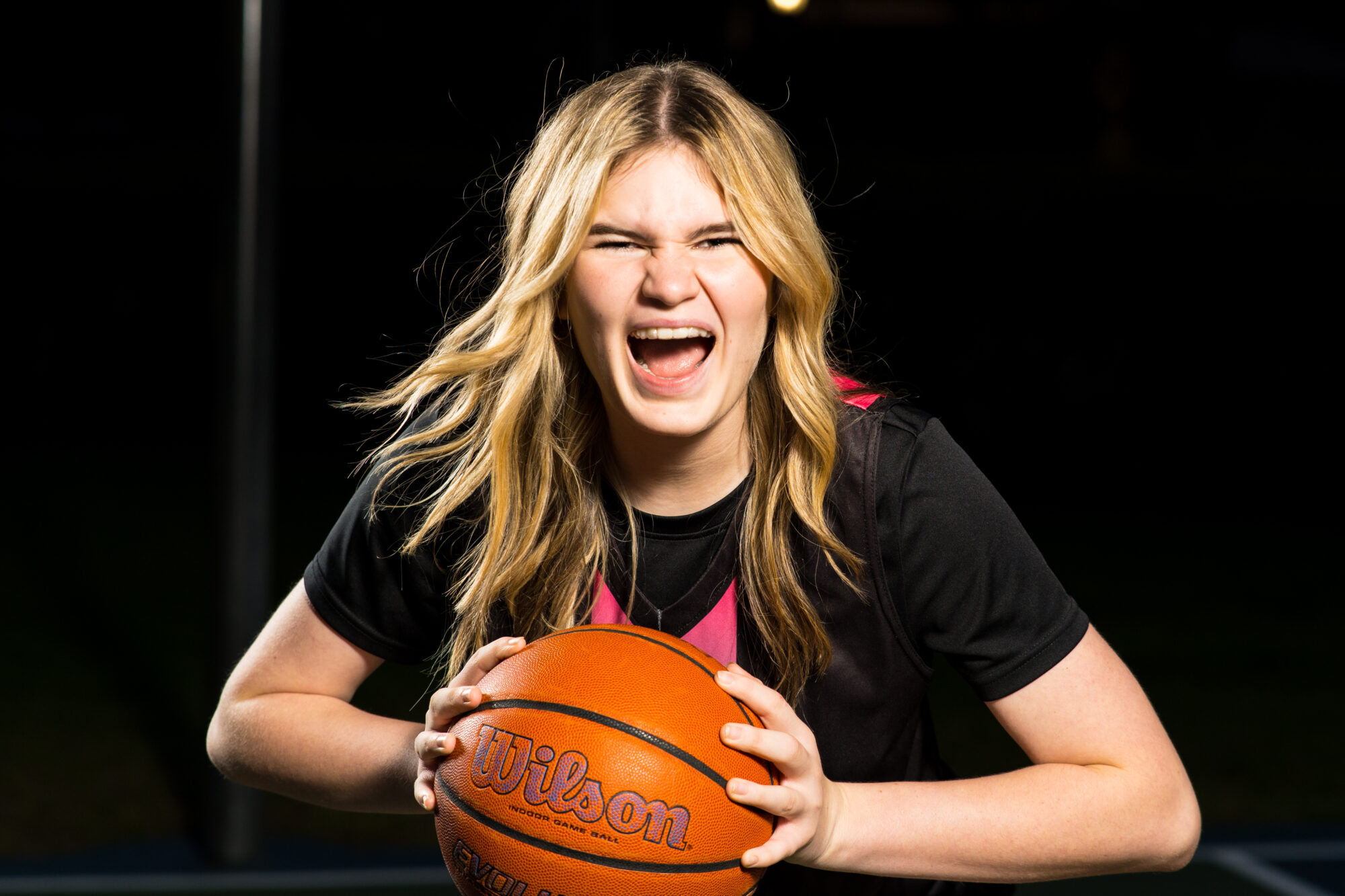
85mm 1/160s f/4 ISO 250
Depth
Take the above example of this young athlete. The shadow on her neck defines her face's shape, using contrast, because its simply a different color/shade. It also helps us, the viewers, infer depth. That is why, despite the nature of 2-D images, the nose also "pokes" out. Imagine for a moment, that the shadow wasn't there. We would think her face would be quite flat, yes?
That's exactly the point! Its even how we view something as simple as hair. Even something as small and fine as that casts a shadow, a texture, gives us depth and shape to our subject.
Thankfully, this concept is easy to understand.
Portraits
Alright. Now for the juicy stuff. How can we use lighting for portraits?
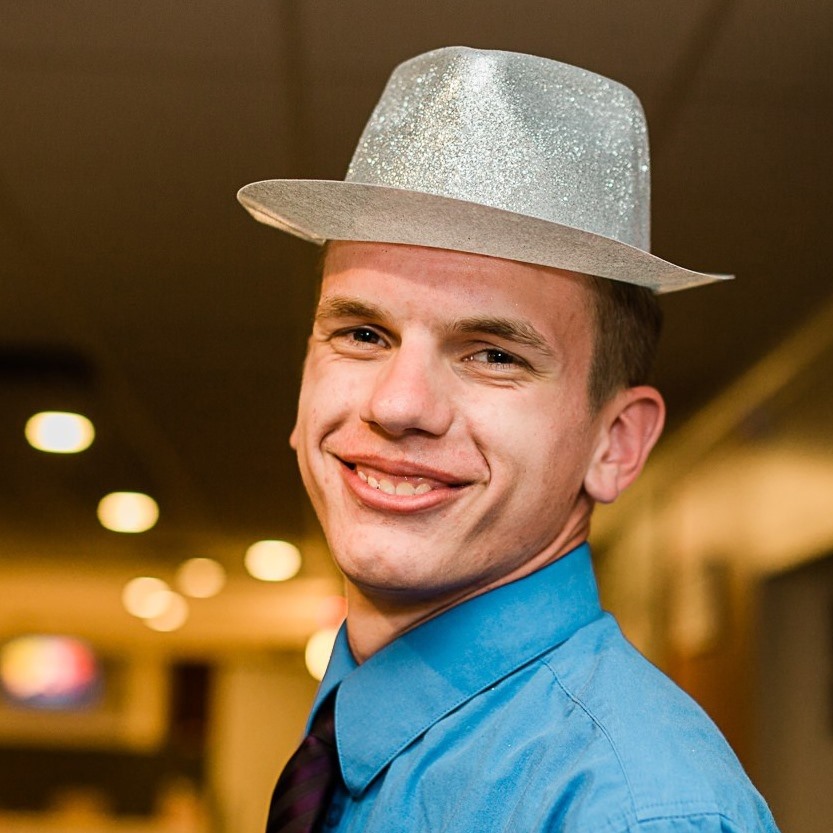
With the above explained, we now move on to composition and artistic intent. In the photo of me above, there are two things that should immediately stand out to you: first, my smile to convey emotion. Second is my eyes, to enhance the image. The photographer who got this image centered me in the frame (I cropped it down to a 1x1) to make it clear that I am the intended subject of this picture.
But lets break down what makes this shot look so good.
First, the proper employment of shadows. The easiest shadow to point out is my nose, just below the nostrils. As I've said already, it helps define my shape. What about my eyes? Or my ear? Chin? All of these things give the viewer clues as to how my face actually looks for real, rather than being a strictly flat image.
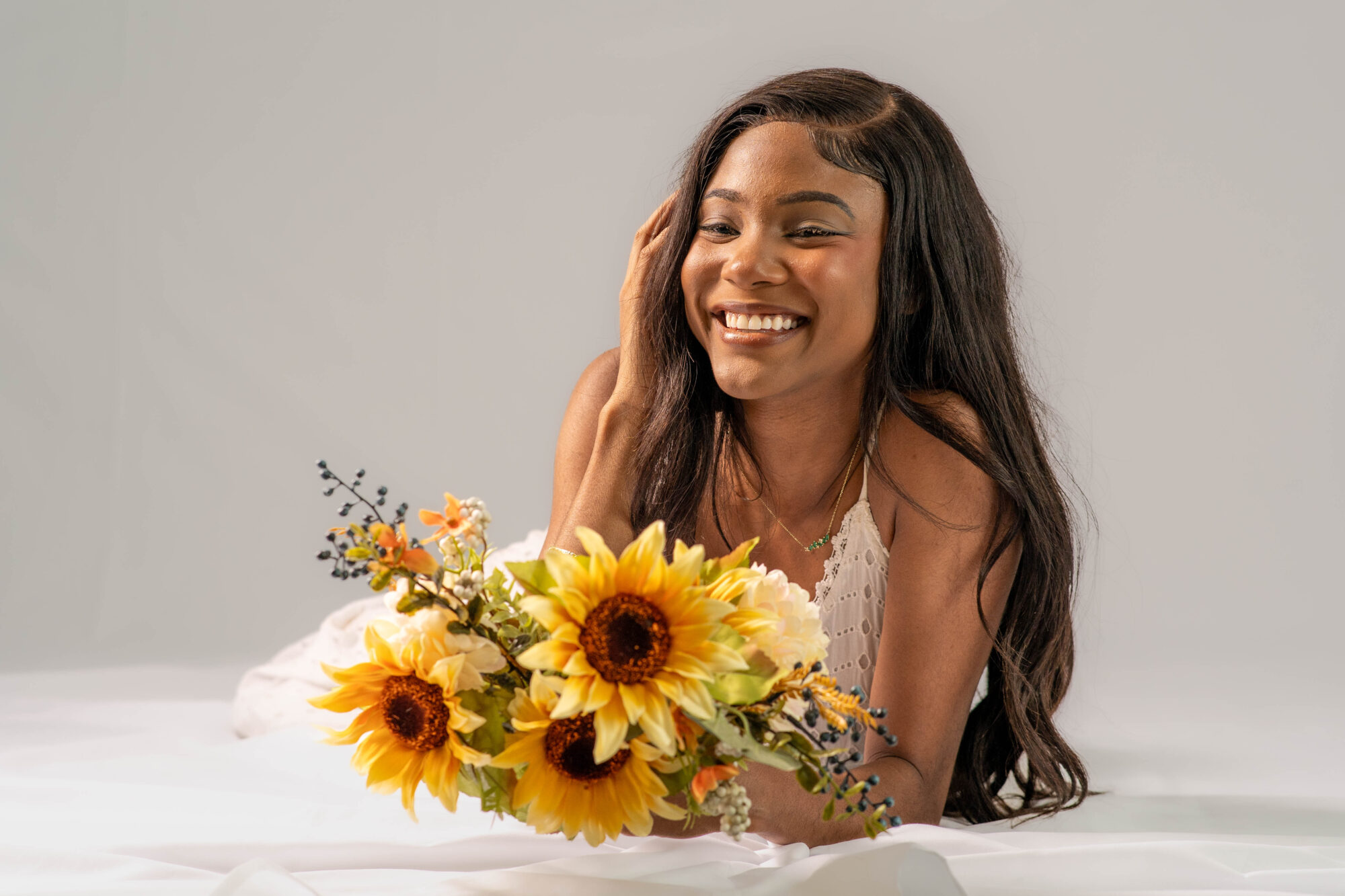
85mm 1/160s f/4 ISO 400 with Flash
Above is my good friend Chelsey. I did this photo-shoot for her a while back and I think it showcases exactly what I'm trying to convey to you, the reader. Using context clues we can see that there is a strong light source just above her and to the left, somewhat toward the camera. We know this because of the contrasting tones on her face. I placed the light here intentionally and directed her face to the angle I wanted to make the shapes pop out with better definition. The depth we perceive from the shadows and highlights makes this image feel real.
Small tangent, ever look at a portrait and think about how bad the lighting is? As a photographer, I think about this all the time. But, some images I come across, I don't think that at all! Simply because the lighting feels so natural, we don't have to ask questions about it.
Anyway, on that thought, did you think about this lighting scheme? Most likely not. It feels natural doesn't it?
The unseen things:
Now for more juicy stuff. Did you know its not just one light in this image? No?
For most this would be really easy to miss. In fact, its because it looks so natural that most people miss it. "Why is that?" You may ask.
The simple reason comes to how we see light bouncing off of things. The sun's light for example, bounces off of basically everything. When it comes to round objects, like a ball, it creates a very soft shadow, rather than a hard line where "the sun don't shine" (please read that in a cowboy accent). Light travels in a straight line. Then when it bounces off another object, that light is reflected onto the next surface it touches; therefore making shadows smooth.
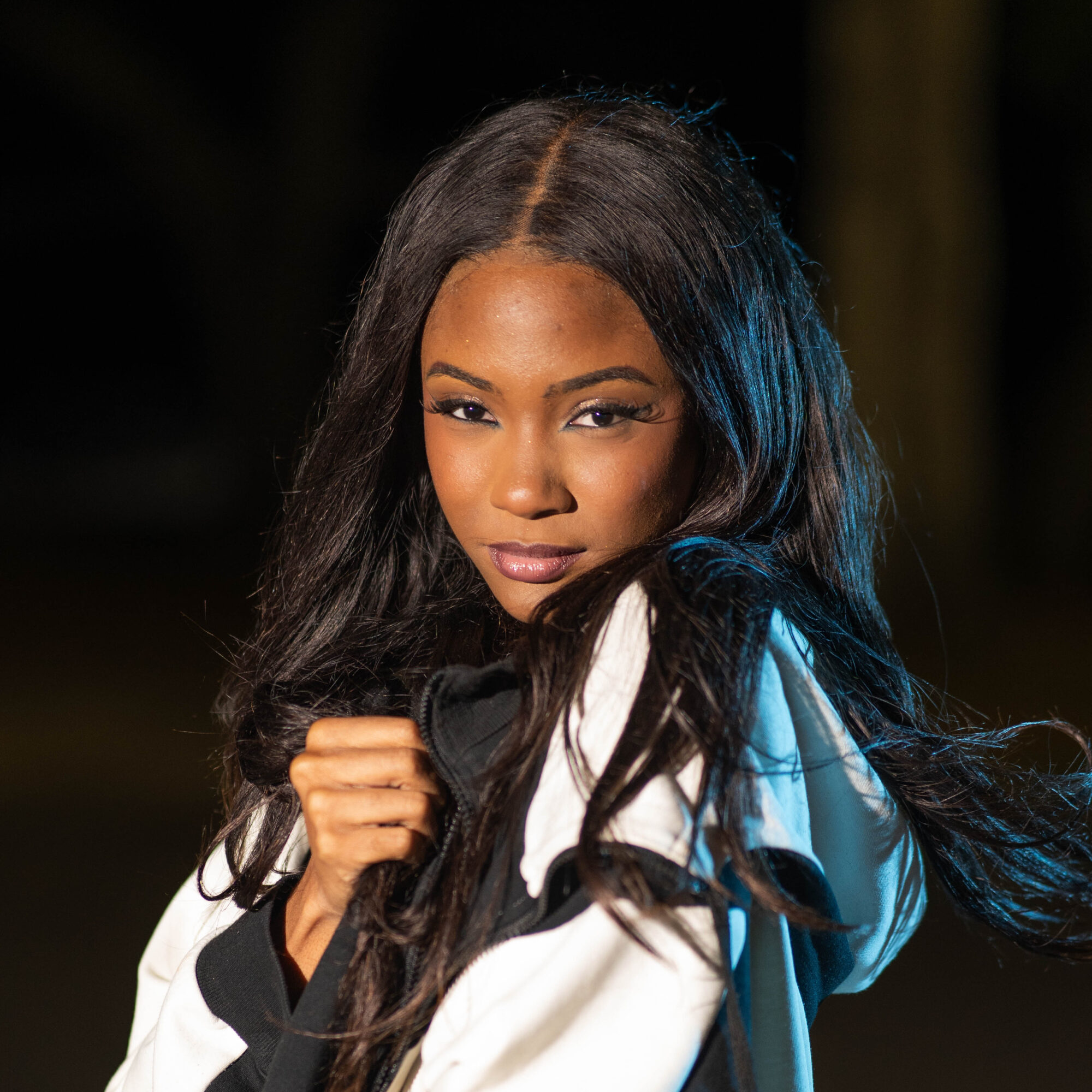
85mm 1/500s f/1.8 ISO 1250 with Flash
This image I think better showcases what I am talking about, but in a more direct way.
Shout-out to Chelsey for this one again. With the amazing power of color, I will point out the blue hues on the right half of her. While this isn't the same lighting scenario as the previous photo, the concept is still the same.
There is a main light illuminating her face. We will call it the white light. While the fill light is the blue light. Fill lighting, when it comes to portraiture is specifically meant to better naturalize the image by removing the intensity of contrasting shadows compared to the white light.
Imagine that this blue light wasn't there at all. It would be a lot of shadow on that half of her, and it would in some way make it harder for you, the viewer, to determine where her hair stops and where the background begins. But more importantly, it would also mean we lose the texture in the hair caused by the contrast of the individual hairs because the highlights wouldn't exist. There is no light bouncing off of it into the camera.
So lets go back to this image. If the fill light didn't exist, we would actually lose depth. There would be no, or strong enough, highlights in the right half of her face to give us a natural look to her hair.
The reason why this looks natural, when compared to the darker image above is, color aside, the intensity in which I have employed a second flash to produce those highlights.
Fun little context clue: if you look at the right cheek, there is a separate white highlight that has a different angle of attack from the main light. Its a subtle, yet easy giveaway there is more than one light at work.
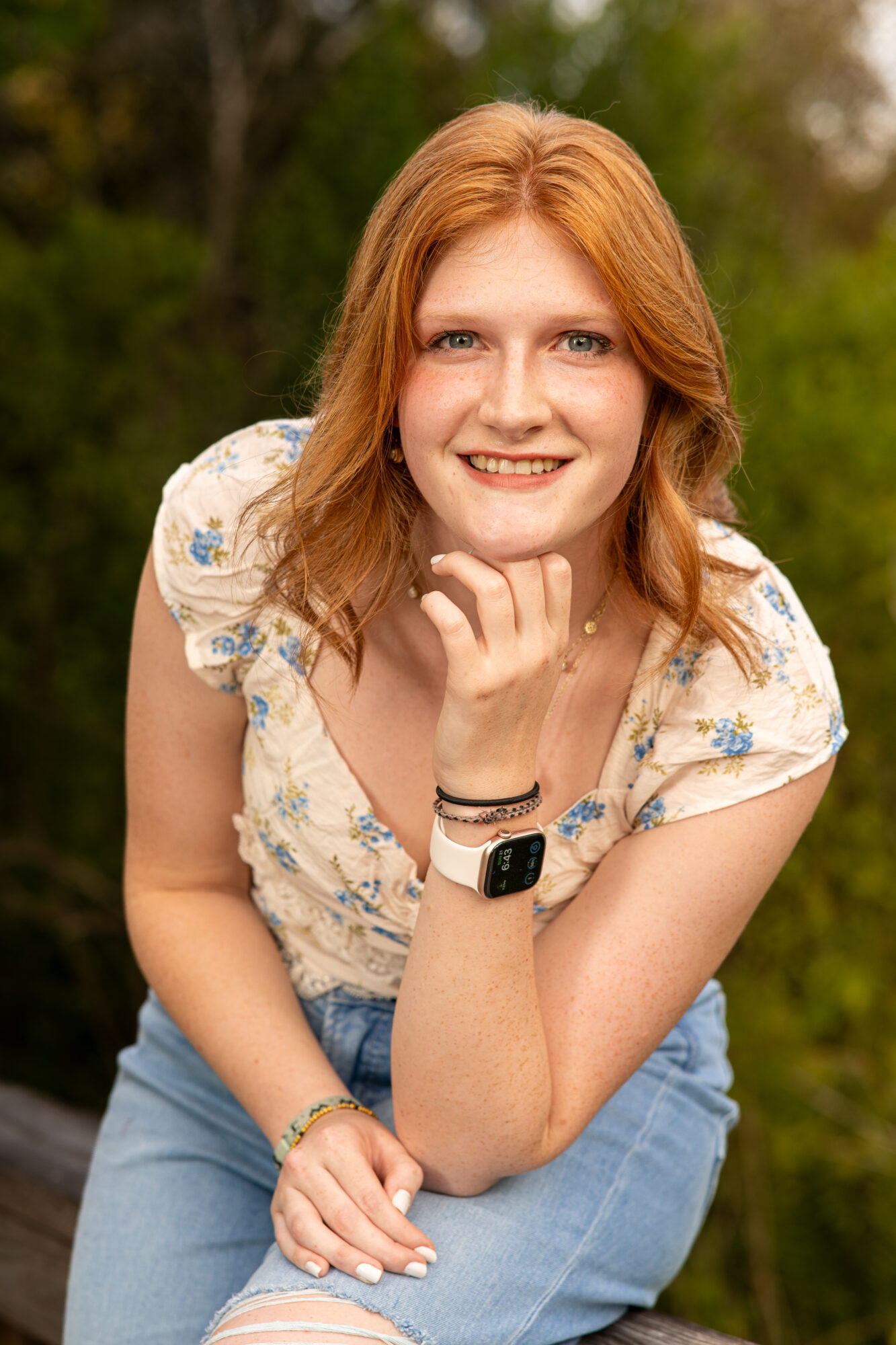
85mm 1/250s f/4 ISO 160
I want to finish off on what a natural lighting scenario looks like. Above is a High School Senior I did a shoot for outdoors. There is only natural light in this shot. The sun is behind her and to the left (context clue, the highlights in her hair but not the face), yet the face is still adequately illuminated. That is because the sun is so strong that the light is bouncing off of every blade of grass, every tree branch, every pebble in the asphalt, and refracting from the very air in the atmosphere.
This creates a very smooth and clear look to this portrait.
The Takeaway
The purpose of writing and explaining this was meant to be a more "how to make it look natural" approach to picture taking when it comes to employing the contrast of highlights and shadows. Having too many or too few of either is a bad thing. As a photographer, there is a lot we have to make sure we do to make it so the happy middle ground between those two comes to the viewer nicely. Sometimes that means we have to use supplimental light, and sometimes it means we use a simple relective surface.
May this knowledge help you in your photography journey!
----
If you would like to know more about portraits, there is great stuff in my basics of composition article here: https://nonegatives.pro/2024/01/24/photo-composition/